
Know the Terms. Own the Strategy.

Explore essential terms in brand ambassador marketing—from contracts to campaigns—all in one easy-to-navigate glossary.

Brand Ambassador Marketing Glossary

In today’s fast-paced marketing world, brand ambassadors are key to building authentic connections between companies and their audiences. Whether you’re a business navigating ambassador programs or an athlete growing your professional presence, understanding the right terminology is essential.

This comprehensive glossary covers key terms related to ambassador management, sponsorships, contracts, and marketing campaigns. Browse the A–Z guide to sharpen your knowledge and get the most out of your ambassador-driven strategy.
A

Activation: The process of bringing a sponsorship to life through various marketing activities and campaigns.

Agent: A representative who manages the business and legal affairs of an athlete, negotiating contracts and securing endorsements.

Ambassador: An athlete who represents and promotes a brand in exchange for compensation.

Ambassador Management Platform (AMP): Strategies and technologies used to manage interactions with current and potential customers.

Athlete Activation: Initiatives that engage sponsored athletes in promotional activities, such as appearances, social media takeovers, or content creation.

Athlete Endorsement: A marketing strategy where professional athletes promote a brand or product.

Appearance Fee: The payment an athlete receives for attending an event or making a public appearance on behalf of a brand.

Autograph Session: An event where athletes sign memorabilia for fans, often organized to promote a product or brand.

Athlete Sponsorship: Providing financial support, products, or services to athletes in exchange for promotional rights and brand visibility.

B

Brand Alignment: The strategic matching of a brand’s values and image with the athlete’s public persona.

Brand Ambassador: An athlete who is contracted to promote and endorse a brand consistently over a period.

Brand Endorsement: A formal agreement where an athlete publicly supports and promotes a brand or product.

Brand Integration: Incorporating a brand’s products or services into the athlete’s personal and professional activities.

Brand Loyalty: An ambassador’s genuine preference and consistent promotion of a brand.

C

Campaign: A coordinated series of marketing activities designed to promote a product, service, or brand over a specific period.

Collaborative Sponsorship: When two or more brands work together to sponsor an athlete or event, sharing costs and marketing exposure.

Compensation Package: The total payment an athlete receives, including base salary, bonuses, and other incentives.

Content Marketing: A marketing strategy focused on creating and distributing valuable, relevant, and consistent content to attract and retain a target audience, often used by athletes and ambassadors to engage followers.

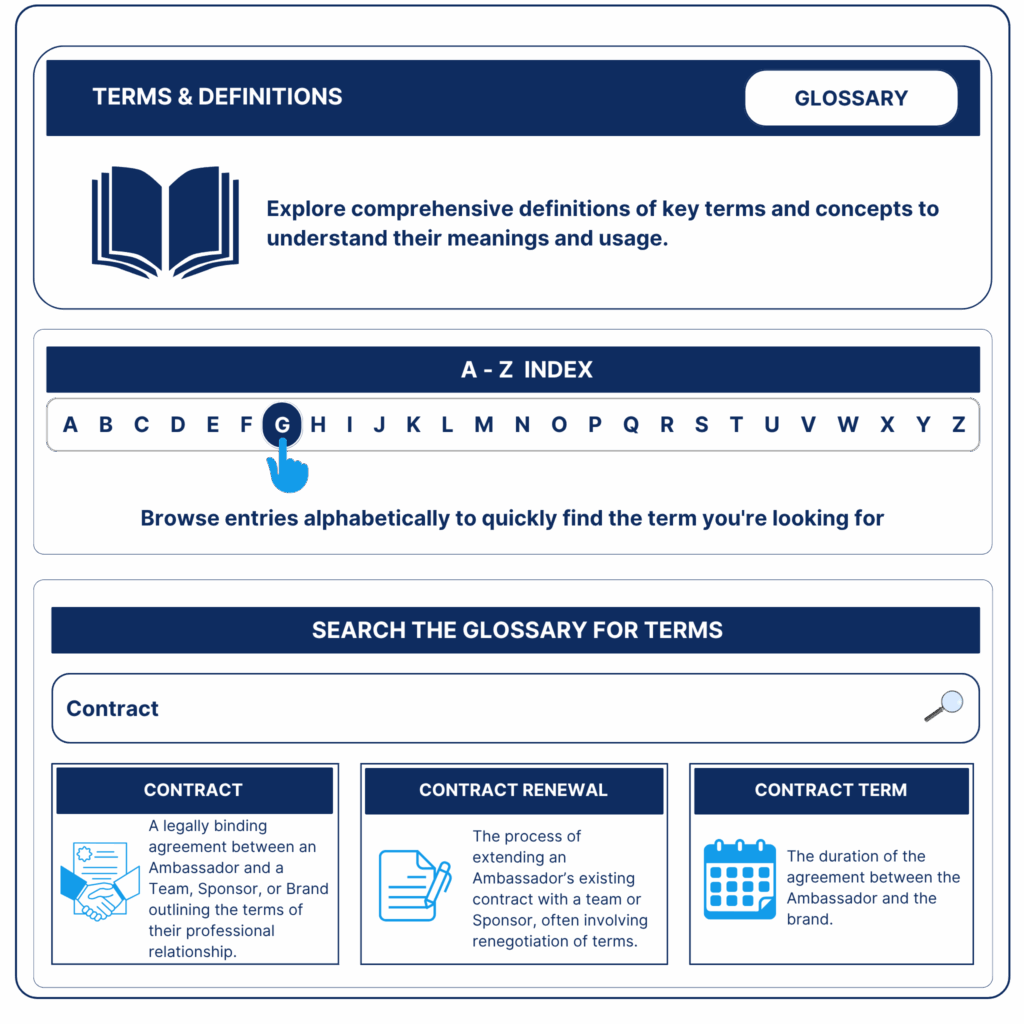
Contract: A legally binding agreement between an athlete and a team, sponsor, or brand outlining the terms of their professional relationship.

Contract Renewal: The process of extending an athlete’s existing contract with a team or sponsor, often involving renegotiation of terms.

Contract Term: The duration of the agreement between the athlete and the brand.

Conversion Rate: The percentage of audience members or followers who take a desired action, such as purchasing a product or signing up for an event, based on an ambassador’s promotion.

D

Digital Footprint: The presence or trace of an ambassador’s activities, including social media posts, blogs, or digital engagements, which brands track to evaluate exposure and influence.

Direct Endorsement: A type of endorsement where the athlete directly promotes a product or service, often through personal recommendations or testimonials.

E

Endorsement Deal: An agreement in which an athlete promotes a company’s products or services in exchange for compensation.

Event Activation: On-site activities and promotions designed to engage attendees and enhance brand presence at events.

Exclusivity Clause: A provision that prevents the athlete from endorsing competitors of the sponsoring brand.

F

Fan Engagement: Strategies and activities aimed at increasing interaction and connection between athletes and their fans.

Full-Service Management: An agency or platform offering comprehensive services for managing athlete sponsorships, contracts, social media, events, and promotions.

G

Grassroots Marketing: Marketing efforts aimed at creating community-level engagement, often involving local events, meetups, and collaborations with local athletes.

H

Host: A brand ambassador or athlete who is responsible for running or hosting a particular event or activity, such as social media live sessions or brand-sponsored events.

I

Image Rights: Legal rights regarding the use of an athlete’s likeness, name, and persona for marketing purposes.

Incentive Clause: Additional rewards given to the athlete based on the success of the marketing campaign or product sales.

Influencer Marketing: A marketing strategy where brands leverage the influence of athletes or ambassadors to promote products or services to their followers.

Intellectual Property (IP): Legal protection for creations, such as an ambassador’s image, name, or likeness, that a brand can license for marketing use.

J

Joint Venture: Collaboration between brands and ambassadors to create new products or campaigns.

K

Key Performance Indicator (KPI): Metrics used to measure the success of ambassador activities or campaigns.

L

Licensing Agreement: A contract that allows a company to use an athlete’s name, image, or likeness on their products.

M

Marketing Collateral: Promotional materials used to support marketing efforts, such as brochures, social media posts, or merchandise featuring the ambassador.

Media Buy: The purchase of advertising space during or around an athlete’s appearances or sponsorship activities to maximize exposure.

Merchandising: The production and sale of branded goods featuring an athlete’s name, image, or likeness.

Morals Clause: A provision allowing the brand to terminate the contract if the athlete engages in behavior that negatively impacts the brand’s image.

N

Non-Compete Clause: A provision restricting the athlete from endorsing competing brands for a specified period.

O

Onboarding: The process of integrating a new ambassador or athlete into a sponsorship program, providing them with the necessary tools, guidelines, and brand information to represent the company effectively.

Organic Reach: Natural audience exposure from ambassador promotions without paid advertising.

P

Performance Metrics: Specific goals or benchmarks an athlete must achieve for additional compensation or contract renewal.

Personal Appearance: An event where an athlete appears in person for promotional activities, such as signings, meet-and-greets, or public speaking.

Personal Services Agreement: A contract where an athlete agrees to perform specific services, such as appearances or endorsements, for a brand.

Pitch: The proposal a brand or agent presents to an athlete or ambassador, outlining the value and terms of a potential sponsorship or endorsement deal.

Product Endorsement: The promotion of a brand’s product by an athlete in exchange for compensation.

Public Relations (PR): Activities aimed at managing and improving an athlete’s public image and relationships with the media and fans.

Publicity Rights: The rights to control the commercial use of an athlete’s name, image, and likeness.

Q

Qualified Leads: Prospective customers identified through ambassador-driven marketing activities.

R

Reach: The estimated number of potential customers exposed to a brand’s message through an athlete or ambassador’s endorsement or social media.

Renewal Option: A clause that allows the brand to extend the contract for an additional period under specified terms.

ROI (Return on Investment): A performance measure used to evaluate the profitability of a sponsorship or endorsement based on the value generated relative to the cost.

Royalty: Payments made to an athlete for the ongoing use of their name, image, or likeness on products or services.

S

Segmentation: The process of dividing a large audience into smaller groups based on characteristics like demographics, interests, or behaviors to tailor ambassador campaigns more effectively.

Social Media Management: The process of creating, scheduling, analyzing, and engaging with content posted on social media platforms to enhance an athlete’s online presence.

Social Proof: The influence that an athlete’s endorsement has on potential customers, driven by the perception that if the athlete supports the brand, it must be of high quality.

Sponsorship: A form of marketing where a company supports an athlete financially or through the provision of products and services in exchange for promotional rights.

Sponsorship Activation: The execution of marketing strategies and activities to leverage an athlete’s endorsement for maximum brand exposure.

T

Talent Management: The comprehensive management of an athlete’s career, including contract negotiations, endorsements, public relations, and personal brand development.

Termination Clause: Conditions under which either party can end the contract before its official end date.

Terms and Conditions: The detailed provisions and stipulations set forth in a contract between an athlete and a team or sponsor.

Trademark: A legally registered symbol, name, or logo used to identify and protect an athlete’s brand identity.

U

Usage Rights: The terms under which a brand can use the athlete’s image and likeness in marketing campaigns.

V

Value Proposition: The unique benefits and advantages that an athlete offers to sponsors and brands through their endorsement and promotional activities.

Viral Marketing: A strategy that leverages social media platforms and influential figures like ambassadors to rapidly spread brand messages, often through the creation of highly engaging and shareable content.

W

Wearables: Branded clothing and accessories provided to the athlete to wear during public appearances or events.

What is BAMP?: BAMP stands for “Brand Ambassador Management Platform”.

X

X-Promotion: Collaborative promotional efforts involving ambassadors from multiple brands.

Y

Youth Marketing: Strategies targeting younger demographics through ambassadors popular among youth audiences.

Z

Zero-Based Budgeting: Budgeting approach where ambassador marketing expenses must be justified annually based on performance metrics.